
Under-methylation: Walsh Protocol #2
The Most Common Biotype of the Walsh Protocol

Since the live stream I did with Kristina God, I’ve gained a lot of new subscribers. That’s why I decided to repost my work on the Walsh protocol. Since this protocol is literally the reason I started this Substack, I think it’s a good idea to share it with as many people as possible. Enjoy the read, everyone.
If you are here, it means that you want to learn about the Walsh Protocol, which I have mentioned in my live streams and other articles. I will once again explain what the Walsh Protocol is, based on the work of William Walsh, a well-known American biochemist.
This protocol is the culmination of more than 50 years of research and major discoveries on nutrients, genetics, behavior, and the role of nutrition in human health. It is based on the initial work of Carl Pfeiffer, a well-known American psychiatrist. The Walsh Protocol is the culmination of this work. It includes more than 30,000 patients, whose biochemical profiles have been analyzed in depth.
The protocol includes:
- 30,000 patients
- 110 markers tested for each patient
- 8,000 cases of ADHD and autism
- 8,000 cases of anxiety and depression
- Others.
In 1980, Carl Pfeiffer’s work was nominated for the Nobel Prize in Medicine on the same day that Walsh and Pfeiffer met. (He did not receive it). The protocol is a continuation of this work. Everything I will discuss in this article has been explained in the book “Nutrient Power,” published by William Walsh, which I invite you to read.
I hope you enjoy this article and that it helps you gain a clearer understanding of the mysteries of biochemistry and human behavior.
The biotype that I will study here is called “under-methylation”, a very distinctive and common biotype that can be the cause of anxiety and depression in people.
Undermethylation may be one of the most misunderstood biochemical patterns in modern psychiatry. On the surface, it can resemble classic depression, high-functioning anxiety, obsessive thinking, perfectionism, or chronic inner tension. Many individuals appear disciplined, driven, and mentally sharp — yet internally they struggle with persistent low mood, rumination, seasonal worsening, and a sense of emotional constriction.
What makes this pattern particularly complex is that it does not fit neatly into conventional diagnostic categories. It is not simply “low serotonin,” nor is it purely psychological. In the Walsh model, undermethylation reflects a reduced methylation capacity — a biochemical state that can influence gene expression, neurotransmitter balance, histamine regulation, and stress resilience. This may help explain why some individuals respond poorly to SSRIs, why certain forms of folate can aggravate symptoms, and why specific personality traits so often cluster together in these cases.
The most striking feature is the consistency of the profile. When properly identified, the pattern tends to follow predictable biochemical markers and predictable clinical responses. But it also requires precision. The wrong supplement can worsen symptoms. The right one, at the right dose, can produce steady and measurable improvement.
In the next section, we will examine the core biochemical markers of undermethylation, the characteristic symptom profile, and the structured nutrient protocol described in the Walsh model — including the common mistakes that can derail progress. In this episode of my Walsh Protocol series, you will learn more about histamine, gene involved in neurotransmitters activity, nutrients influencing methylation, personality traits that may be linked to biochemistry, as well as many other things.
I will also present a complete protocol to restore normal methylation status.
Starting today, I will be posting one episode of the Walsh Protocol every Monday. There are approximately 10 episodes left in this program.
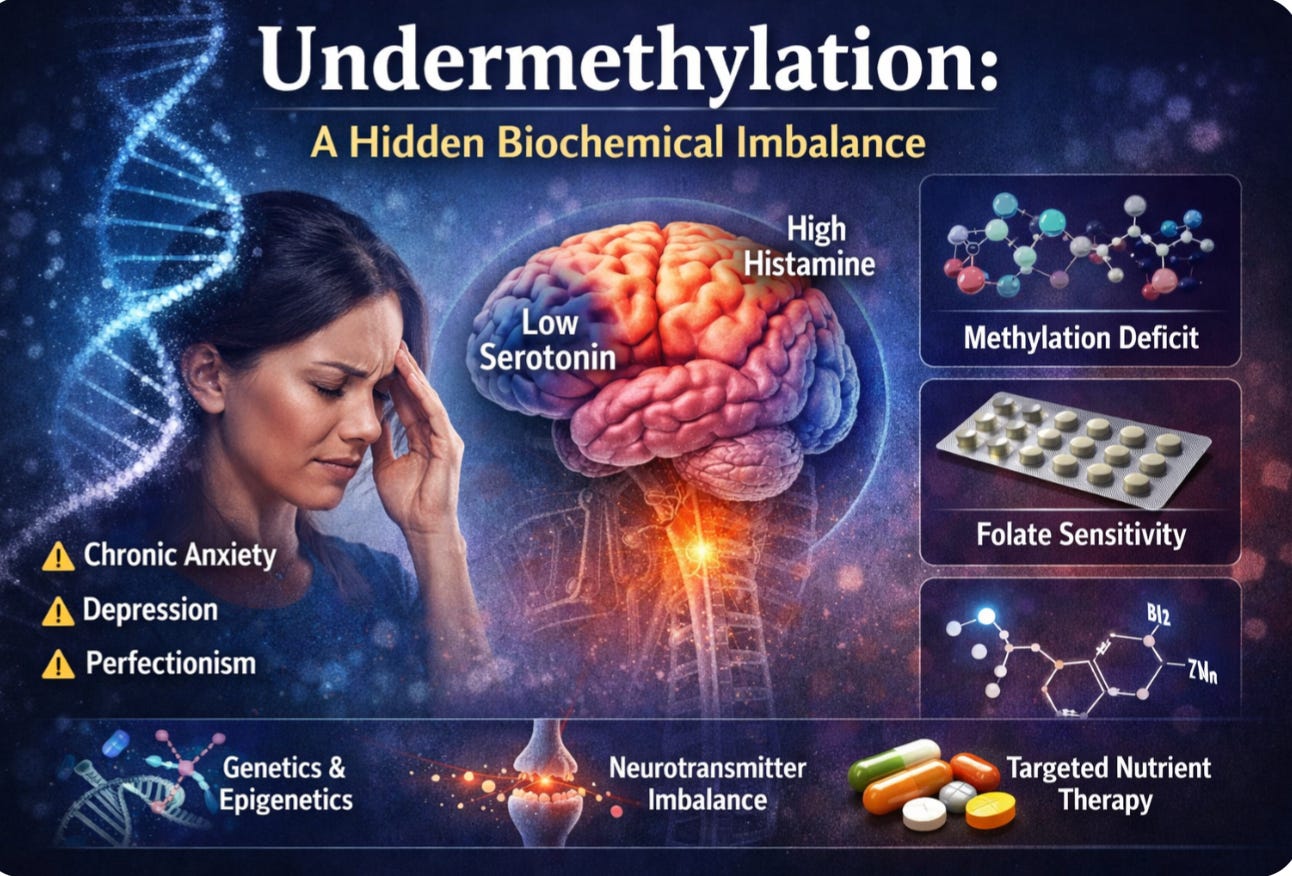
Undermethylation: A Beginner-Friendly Introduction
If you are new to the concept of methylation, this may sound technical or intimidating at first. But the core idea is actually simple.
Every second, your body performs millions of tiny chemical reactions that regulate mood, focus, energy, and stress resilience. One of the most important of these processes is called methylation. I already did a small article about it here
In very simple terms, methylation is the transfer of a small chemical unit — called a methyl group (CH₃) — from one molecule to another. This small transfer has big consequences. It helps:
Produce neurotransmitters like serotonin and dopamine
Regulate gene expression (which genes are “turned on” or “off”)
Detoxify certain compounds
Support immune balance
Control histamine levels
When methylation functions properly, mood regulation tends to be more stable. When it is impaired or imbalanced, psychological and physiological symptoms may appear.
What Is Undermethylation?
Undermethylation refers to a state in which the body does not produce or utilize enough methyl groups efficiently. According to the clinical database developed by William J. Walsh and based on earlier work by Carl Pfeiffer, this is the most common biochemical subtype observed in their patients, representing roughly 40% of cases.
People in this category appear especially sensitive to the balance between methyl donors (like SAMe and methionine) and folates.
Interestingly:
They often improve with methyl donors.
They may worsen with high doses of folates.
They frequently show signs consistent with low serotonin activity.
This is not a psychiatric label. It is a biochemical pattern that may help explain why two people with similar depressive symptoms can respond very differently to the same supplement or medication.
Why This Matters for Beginners
If you have ever wondered:
Why do some people feel dramatically better on SAMe while others become anxious or overstimulated?
Why do SSRIs work very well for certain individuals but not others?
Why do some perfectionistic, high-achieving personalities struggle with inner tension and rumination?
The concept of undermethylation attempts to offer one possible biochemical explanation.
In the sections below, we will explore:
The biological markers of undermethylation
The typical personality traits associated with it
The response pattern to supplements and medications
And practical considerations for support
The goal is not to oversimplify complex psychiatry, but to provide a clear and accessible framework for understanding biochemical individuality.
Now that we have clarified the basics, let’s explore the profile of undermethylation in more detail.
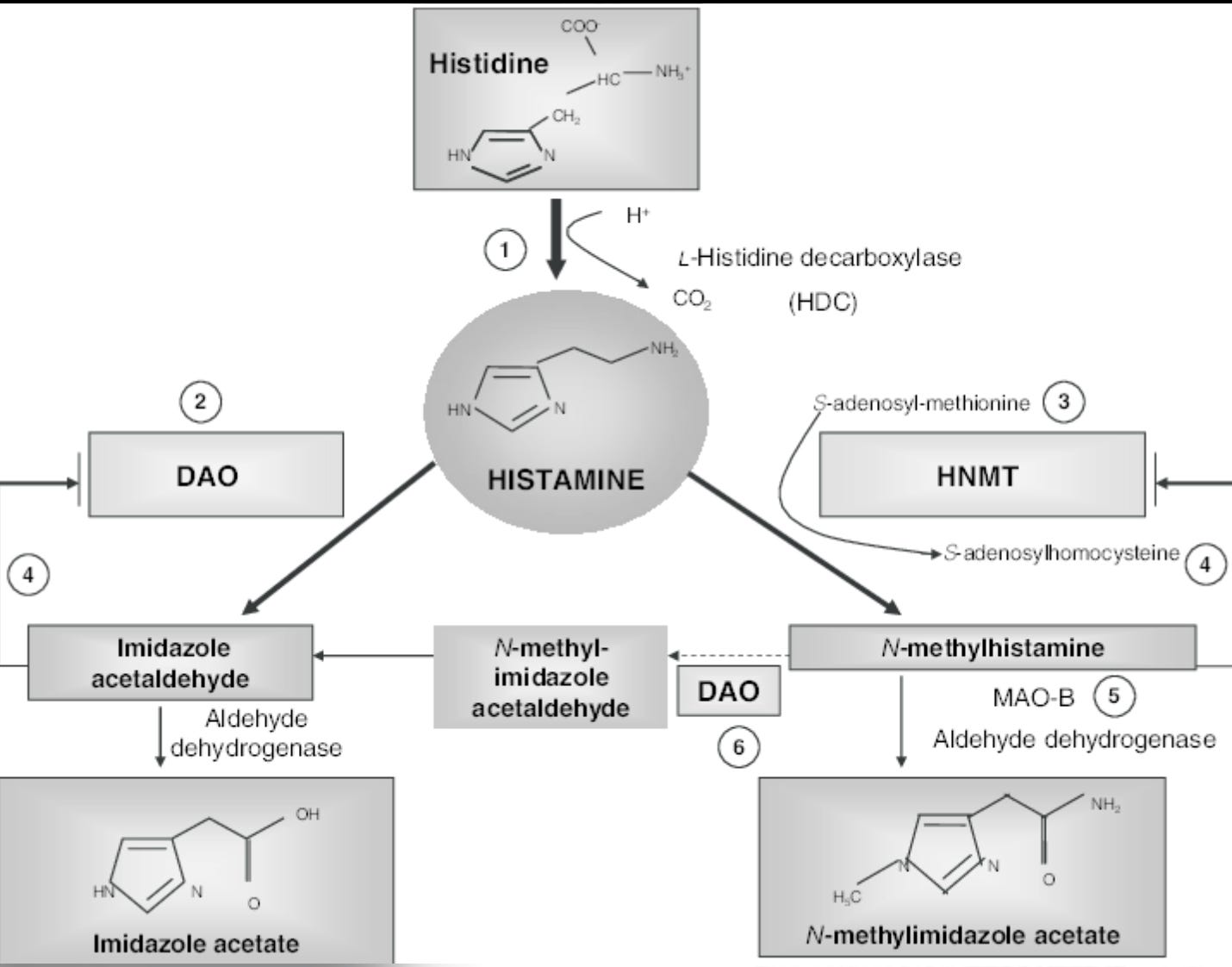
Undermethylation: The Most Common Biotype
Understanding Undermethylation: Traits, Biochemical Markers, and Clinical Approach
In the Pfeiffer–Walsh database, undermethylation represents the largest patient group, accounting for roughly 40% of cases. According to the work of William J. Walsh and Carl Pfeiffer, this biotype is characterized by a strong sensitivity to the balance between methyl groups and folates in the brain.
People in this category tend to respond positively to methyl donors such as SAMe (S-adenosylmethionine) and methionine. However, paradoxically, they often react poorly to high doses of folates—even though folates are also involved in the methylation cycle. Walsh explains that the epigenetic effects of folates may override the simple presence of an attached methyl group (CH₃), leading to unexpected clinical reactions in susceptible individuals.
Most undermethylated patients display symptoms consistent with low serotonin activity. Many report having responded well to SSRIs (selective serotonin reuptake inhibitors) in the past, which further supports the serotonin connection.
How Is Undermethylation Identified?
Diagnosis in the Walsh model typically involves:
Whole blood histamine levels above 70 ng/mL
A SAMe-to-SAH ratio indicating low methylation capacity (often SAMe < SAH)
Clinically, these individuals are often recognizable based on behavioral patterns and personality traits.
They are frequently described as:
Perfectionistic
Highly self-disciplined
On the obsessive-compulsive spectrum
Prone to seasonal allergies (high histamine)
Major Symptoms and Personality Traits
Below is a simplified overview for readers new to this concept:
Typical Clinical Features
Good response to SSRIs
Good response to antihistamines
Positive response to methyl donors (SAMe, methionine)
Poor tolerance to folic acid or high-dose folates
Mental rigidity (OCD tendencies, strong need for control)
Strong academic performance; perfectionism
Suicidal ideation may be present in depressive states
Family history of high academic or professional achievement
Frequent rumination about past events
High inner tension despite appearing calm
Often described as quiet or very composed
High libido
Competitive in sports
Defiant toward parental authority in childhood
Frequent seasonal allergies
Low pain tolerance
This profile is remarkably consistent across many reported cases in the Walsh database.
Clinical Research and SAMe: A Striking Observation
Before discovering the Walsh protocol, I had already reviewed numerous studies on nutrition and supplementation for anxiety and depression. One study that stood out was conducted by George Papakostas, examining SAMe as an adjunct treatment for depression.
In his sample, approximately 36% of patients responded positively to SAMe, which is the body’s primary methyl donor.
This percentage is interesting. It suggests that only a subset of patients benefit significantly from this compound—consistent with Walsh’s idea that methylation status determines response.
A recurring theme in patient testimonials is that:
Some individuals experience clear antidepressant benefits.
Others become overstimulated, anxious, or even hypomanic.
There are reports of manic or hypomanic switches following SAMe supplementation. For example, one individual described being severely depressed and bedridden, then after taking 800 mg/day of SAMe, suddenly launching into ambitious travel plans abroad within days.
This illustrates an important point:
SAMe is powerful.
When given to the wrong person, it may cause adverse or even severe effects.
When given to the right person—carefully and progressively—it can be extremely helpful.
Practical Considerations About SAMe
There are also formulation challenges:
SAMe tablets are typically enteric-coated because the molecule must survive stomach acid to be absorbed in the intestine.
Some intramuscular (IM) formulations are available in certain countries, including Italy.
The compound can be expensive and sometimes poorly tolerated.
An Alternative Approach: Creatine and Methionine
In my personal view, creatine may be a more practical and better-tolerated option for many patients.
Here is the reasoning:
SAMe is synthesized in the body from methionine.
Creatine synthesis consumes large amounts of methyl groups.
By influencing this system strategically, we may enhance endogenous SAMe production.
I developed a theoretical approach that combines:
Methionine supplementation
Creatine supplementation
The goal is to significantly increase the body’s own production of SAMe. I refer to this concept as:
“The Methylation Pincer”
This idea makes sense primarily within the framework of the homocysteine hypothesis and methylation cycle dynamics. By combining methionine (a precursor) and creatine (which interacts with methyl demand), the body may upregulate methylation capacity more efficiently.
