
Serial Killers and Violent Offenders: The Walsh Protocol
Examining William Walsh's hypothesis

In the end, I decided to publish this article today, despite what I announced yesterday. It will be republished in a few months. So here is William Walsh’s article on serial killers.
IMPORTANT NOTICE
Before beginning this article, I want to say a few things. The content of this text may be shocking to some people and should not be shown to minors. In this post, I will revisit some of the crimes that most shocked global public opinion, particularly in the United States, during the 20th century.
For several weeks now, I have been introducing you to the Walsh Protocol and the work of its creator, William Walsh. The Walsh Protocol explores the complex links between nutrients, brain and mental health, and related behavioral disorders. During his lifetime, William Walsh amassed a database of more than 30,000 patients and studied thousands of schizophrenics, young people with complex ADHD, nonverbal autistic individuals (ASD), and ultra-violent adolescents, particularly among the juvenile prison population.
I want to start by saying that I am not making any generalizations or comparisons between the populations described and the few individuals who will be described in this article. I would also like to point out that the following analysis should in no way be used as a mitigating factor to explain or minimize the acts committed by the individuals mentioned.
When studying human behavior, we encounter a wide range of intensities. Dealing with human behavior means dealing with the most extreme aspects of it. In his career, William Walsh has met tens of thousands of people, including some of the worst criminals. The news provides many examples of these tragic events. Drawing a veil over these events only reinforces knee-jerk reactions, which aim to exclude these people from the human race by demonizing them. We must therefore ask ourselves why, adopting a detached approach and free of emotional reflexes.
Finally, I would like to point out that the link between genetics and crime has not been established by science. This is what William Walsh says. It is not a question of linking crime and genetics, or adopting a deterministic perspective on behaviors deemed antisocial. The facts presented in this section are intended solely to explore the potential links between genetic profiles and certain abnormal behavioral developments. No absolute cause-and-effect relationship between the two can be assumed.
This paper will review the cases of people like Charles Manson, Jeffrey Dahmer, Ted Bundy, as well as mass murderers like Richard Speck, Adam Lanza from the Sandy Hook mass shooting, as well as Columbine high school shooters.
Throughout their careers, William Walsh and Carl Pfeiffer focused on nutritional and biochemical imbalances that are very often associated with severe behavioral disorders. Some of those imbalances, like the accumulation of copper, is severely associated with impulsivity, irritability and anger management problems. In their practice, they found that some ASD and juvenile populations exhibited personality traits that could be caused by those imbalances.
The following development will present about 9 cases of people that remain famous for their criminal history.
Walsh and Pfeiffer spoke of “biochemical vulnerability” to deviant behavior. In particular, they focused on copper and heavy metal poisoning, which can sometimes be the source of violent behavior in childhood. Walsh and Pfeiffer tried to describe how serious imbalance could contribute to extreme anger, impulsivity, sadism and be a contributor factor to criminal behavior. Please remember that biochemistry here is only one part of the explanation.
The descriptions of criminal profiles will be found in the second part of the article.
Lessons from Prison:
The Walsh Protocol and the Study of Juvenile Criminality
Carl Pfeiffer’s Work with “Young Offenders” at Statesville Prison (Illinois)
In the early 1960s, Carl Pfeiffer began his research by studying nutritional imbalances in patients diagnosed with schizophrenia. At the time, he was affiliated with Princeton University and directed the Brain Bio Center, a clinical research facility dedicated to advanced biological analysis.
Pfeiffer focused particularly on:
Mineral metabolism
Heavy metals (especially zinc and lead)
Histamine disorders
Food allergies and intolerances
He collected hair samples from thousands of individuals and sent them to Argonne National Laboratory, with which he maintained a research contract. Argonne was internationally recognized for high-precision quantitative analysis and possessed advanced particle accelerator technology, maintaining partnerships with major Ivy League institutions. This work remained quite mysterious and unknown by the medical community. In the 1960s, Carl Pfeiffer was one of the most involved doctor in LSD and psychedelics research. He conducted some of the leading trials on the famous drugs. Moreover, he worked with the CIA in the MK-ULTRA project, even if did not know the goal of the project at the end. Pfeiffer especially took part in the so called “Atlanta experiment”, during which he gave LSD to prisoners. When the Nixon administration banned psychedelics and passed the War On Drugs Act, Pfeiffer became marginalized from conventional research. This is the reason why the Walsh Protocol had the same fate as Pfeiffer.


Pfeiffer was among the first physicians to suggest that gluten sensitivity and celiac disease could contribute to psychiatric and neurological symptoms — a controversial idea at the time. He also investigated lactose intolerance, histamine imbalance, food allergies, and what would later be described as chronic fatigue syndrome. Many of these conditions were dismissed as pseudoscientific during that era. In the 1970s, Carl Pfeiffer was the leading doctor in nutrition research.
His clinic often became the last resort for patients who had exhausted conventional psychiatric options. With time, he became convinced that some biochemical traits and nutrients imbalances could have a profound influence on people’s behavior. All of this is exposed in his famous book The Schizophrenias, that you can find on PDF on the internet. I will not talk about schizophrenia today and to be honest, I don’t have knowledge about this disorder.
The Statesville Prison Studies
As a psychiatrist, Pfeiffer treated numerous adolescents with behavioral disorders, both incarcerated and non-incarcerated. He established a research collaboration with the Statesville Penitentiary in Illinois. This prison is now closed, but was one of the “maximum security” prison of the state of Illinois at that time, where a lot of very violent criminals were held.
What surprised him was that many of the incarcerated youths did not fit the expected sociological profile of marginalized offenders.
Many came from stable, financially secure families.
Several had no obvious background of extreme social deprivation.
Yet some had committed acts of severe violence, marked by cruelty, pathological irritability, and absence of remorse.
These studies were conducted between 1978 and 1988, a decade that coincided with Pfeiffer’s collaboration with William Walsh. The day William Walsh met Pfeiffer was also the day the famous doctor from Princeton was nominated for the Nobel Prize of Medicine. He did not received it though.
The senior Princeton researcher tasked the younger chemist, William J. Walsh, with conducting interviews and collecting blood samples at Statesville. A very fruitful collaboration started and launched a very passionating body of research.
At that time, the FBI had already shown interest in Pfeiffer’s metabolic findings and regularly reviewed his publications concerning violent offenders and serial killers.
Emerging Biochemical Hypotheses
By the late 1970s, Pfeiffer had identified several recurring biochemical patterns, including:
Abnormal copper–zinc ratios
Histamine dysregulation
Methylation imbalance
Heavy metal accumulation
He eventually proposed five or six major biochemical categories of psychiatric dysfunction, detailed in his book The Schizophrenias: Ours to Conquer.
Although Pfeiffer still referenced conventional psychiatric diagnoses, he believed that underlying biochemical imbalances played a more decisive role than psychodynamic interpretations.
His approach aimed to:
Correct metabolic abnormalities
“Climb back up the etiological chain”
Identify root biochemical causes rather than merely suppress symptoms
He later explored:
Folate metabolism
Homocysteine regulation
Urinary kryptopyrroles
Inflammatory markers such as C-reactive protein (CRP)
He coined the term “malvaria” (or “mauve factor”) to describe a condition of extreme oxidative stress associated with severe behavioral symptoms.
The Walsh Collaboration and Violent Crime
Walsh became particularly interested in offenders convicted of ultra-violent crimes. Like Pfeiffer, he observed that many did not fit the stereotypical image of socially deprived criminals.
Repeatedly, laboratory findings revealed:
Severe mineral imbalances
Heavy metal toxicity
Methylation abnormalities
Extreme copper–zinc dysregulation
Hair analyses were conducted on several notorious American criminals, including:
Charles Manson
Ted Bundy
Richard Speck
Walsh also examined the psychological and biochemical profiles of mass shooters, including:
Eric Harris
Dylan Klebold
Much of the biochemical analysis was performed at Argonne National Laboratory, which provided cutting-edge analytic capabilities.
The major breakthrough of Walsh’s protocol is that it views psychiatric disorders not as a single disease, but as a set of different diseases. The protocol analyzes biochemistry by classifying patients into five main groups:
Under-methylation (Low methylation)
Often associated with elevated histamine and reduced methylation activity.
Common features:
Perfectionism
High inner tension
Obsessive or ruminative thinking
Strong sense of responsibility
Depression with guilt and self-blame
Sensitivity to rejection
These individuals tend to be controlled, disciplined, and morally rigid, but internally anxious.
Over-methylation (High methylation)
Often associated with low histamine and excessive methylation activity. Those patients have too much serotonin and too much dopamine at the synapse, making them prone to anxiety.
Common features:
Emotional sensitivity
Anxiety and mood instability
Racing thoughts
Paranoia or suspicious thinking
Sleep disturbances
They are often emotionally reactive and may respond poorly to certain antidepressants.
Copper Toxicity
Typically linked to a high copper/zinc ratio.
Common features:
Irritability
Mood swings
Anxiety
Emotional volatility
Impulsive reactions
Copper excess may disrupt dopamine and norepinephrine balance, increasing tension and reactivity.
Heavy Metal Toxicity
Includes exposure to lead, cadmium, mercury, or arsenic.
Common features:
Irritability
Poor impulse control
Cognitive difficulties
Attention problems
Increased oxidative stress
Heavy metals may interfere with zinc metabolism and normal brain signaling.
Pyrrole Disorder (HPL)
A distinct condition associated with elevated urinary pyrroles and loss of zinc and vitamin B6. This condition is considered the most severe of the Walsh Protocol. It involves very low synthesis of neurotransmitters (serotonin, dopamine and GABA). It is strongly linked to extreme anger and outburst.
Common features:
Stress intolerance
Social anxiety
Sudden mood shifts
Explosive anger episodes
Chronic inner tension
Often linked to behavioral instability and poor stress regulation.
- A few other specific nutritional deficiencies, such as omega 3-6-9 chain dysregulation, but these are minor in their work.
What makes Walsh’s protocol even more interesting is the fact that they claim to be able to classify people according to their personality traits. People with genetic under-methylation generally have fine features and a very calm appearance, despite inner anxiety and tension. They tend to be quite competitive in team sports and sneeze in the sun in summer (high histamine). They respond well to SSRIs and generally have a family history of depression. All of this is explained in the masterful book Nutrient Power, which I cannot recommend highly enough. If you want to learn more, you can check this video right here, in which he explains all of this
The Shadow of Cesare Lombroso and the “Born Criminal” Hypothesis:
The Problem Raised by the Walsh Protocol
Since the 19th century, numerous theories have attempted to explain criminal behavior. Like other branches of sociology, criminology has been shaped by shifting intellectual currents. Scientific rigor and methodological discipline — particularly those associated with modern behavioral science — were not always the standard.
Between roughly 1870 and 1900, naturalist and biologically oriented theories emerged in an attempt to explain deviant and antisocial behavior. At that time, psychology and psychiatry largely conceived their mission as correcting deviants and treating the “alienated.” Criminality was framed primarily as pathology or madness.
In France, figures such as Georges Vacher de Lapouge and Arthur de Gobineau contributed to intellectual currents that later influenced eugenic thought. It is worth recalling that eugenics did not initially carry the negative connotation it has today; it was once considered by many as a legitimate public health doctrine.
The socio-cultural roots of these ideas are well described in the works of Michel Foucault, particularly in his analysis of institutions, madness, and disciplinary power.
The most emblematic figure of biological criminology remains Cesare Lombroso. In his book L’Uomo Delinquente (“The Criminal Man”), Lombroso argued that criminality was innate and genetically determined. He believed criminals exhibited distinct anatomical and biological traits — physical markers that revealed an atavistic regression to more primitive human forms.
Although Lombroso’s theory emerged within the specific intellectual climate of hygienism and 19th-century alienist psychiatry, the underlying question — whether criminal behavior has biological roots — has never entirely disappeared.
From Lombroso to Pfeiffer and Walsh
By elevating biochemical individuality to the status of behavioral science, Carl Pfeiffer arguably reopened the debate linking biology and deviant behavior. But not in the way the 19th century scientists thought.
The Pfeiffer–Walsh protocol thus raises a profound conceptual issue:
Does identifying reproducible biochemical patterns in violent or antisocial individuals revive, in a modern form, the hypothesis of the “born criminal”?
During my preparatory studies in sociology — under the guidance of Professor Hamdi Nabli (ENS) — I was introduced to structuralist thinkers such as Michel Foucault and Jacques Derrida. I studied excerpts from Discipline and Punish, including analyses of Jeremy Bentham and the Panopticon model.
This led me to explore the anti-psychiatry movement and to read History of Madness. These works deeply shaped my understanding of how societies construct categories of deviance.
More than a century after Lombroso, Carl Pfeiffer’s metabolic studies at the Brain Bio Center arrive — through very different methods — at conclusions that echo a similar idea: some individuals appear biologically predisposed to severe behavioral disturbances. I fully believe this too.
The intellectual paths differ; the philosophical implication is strikingly comparable.
The Limits of Psychologization
Having examined Walsh’s protocol and read parental testimonies for years, I find it difficult to deny that some individuals seem biologically predisposed to severe and socially reprehensible behavior.
In France and elsewhere, psychiatry was long heavily influenced by psychoanalysis. The term “influenced” is used deliberately.
While psychoanalytic thought has intellectual depth, the excessive psychologization of psychiatric disorders may represent a limitation in our era of biochemical and genetic research.
In Nutrient Power, William J. Walsh critiques outdated psychoanalytic assumptions, such as:
The “neurasthenic mother” theory blaming maternal depression for children’s neuroses
The attribution of schizophrenia to repressed homosexuality
Broader assumptions rooted in the tabula rasa hypothesis
The Pfeiffer–Walsh framework challenges this blank-slate model by emphasizing measurable biochemical individuality.
Pfeiffer’s Metabolic Classifications
Early Brain Bio Center Typology
Carl Pfeiffer’s early metabolic studies led to one of the first biochemical classifications of behavioral disorders at the Brain Bio Center. William Walsh later refined and expanded this system.
Below is a structured presentation of the main profiles:
Type A Personality
(Episodic Explosive Disorder / Episodic Rage Disorder)
Core Biochemical Features:
Elevated copper relative to zinc
Heavy metal burden
Histamine dysregulation
Undermethylation
Behavioral Characteristics:
Episodic violence
Intense but intermittent rage
Capacity for remorse after the episode
Poor academic performance
Internal tension and rigidity
In Walsh’s model, Type A individuals are often highly controlled until overwhelmed by emotional pressure, resulting in explosive outbursts.
Type B Personality
(Antisocial Personality Disorder – APD)
Core Biochemical Features:
Low zinc and low copper
Undermethylation or abnormal methylation patterns
Elevated kryptopyrroles (pyroluria)
Hypoglycemia
High heavy metal burden
Behavioral Characteristics:
Defiance of authority
Childhood cruelty toward animals
Fascination with fire and weapons
High pain tolerance
Absence of remorse
Emotional detachment
Type B individuals are described as having shallow affect, reduced empathy, and persistent antisocial patterns.
Conduct Disorder
(Very High Urinary Pyrroles)
Biochemical Marker:
Markedly elevated kryptopyrroles
Behavioral Features:
Severe childhood violence
Erratic behavior
Emotional instability
Difficulty tanning (a peripheral zinc-related marker sometimes cited in pyroluria discussions)
Pfeiffer associated extreme pyrrole elevation with impaired zinc and B6 metabolism, potentially affecting neurotransmitter synthesis.
Oppositional Defiant Disorder (ODD)
Biochemical Profile:
High histamine
Low methylation
Low copper
Low calcium and magnesium
Behavioral Traits:
Chronic irritability
Defiance of authority
Argumentative behavior
Persistent oppositional stance
A Scientific and Ethical Question
The revival of biochemical criminology inevitably raises ethical concerns.
If certain metabolic patterns correlate with violent behavior, how should society respond?
Early screening?
Nutritional intervention?
Preventive psychiatry?
Or risk stigmatization and deterministic labeling?
The central tension remains:
Is biology destiny — or merely predisposition? William Walsh did not believe in predisposition but rather talks about “biochemical vulnerability” to deviant behavior.
The Pfeiffer–Walsh protocol does not claim inevitability. It proposes vulnerability. I also think that some people, with certain genetic mutations, can be predisposed to behavior problems. However, it is important to understand that this is achieved through nutrients such as copper and zinc, and through neurotransmitter concentration. Walsh’s protocol suggests that this can be corrected and improved in the vast majority of cases.
In the next section of the article, I will present the cases of nine individuals, including approximately five who can be considered the worst serial killers in history, as well as mass murderers. At the end of this document, you will find all the PDFs of William Walsh’s lectures, with detailed descriptions of the biochemical profiles of Charles Manson, Richard Speck, and others.
This research was presented at the FBI Academy in Quantico, where William Walsh taught courses in applied criminalistics and applied psychiatric expertise for many years.
I hope you find this interesting and enjoyable. As you can see, I wasn’t lying when I told you that Walsh’s protocol was one of the most interesting topics I’ve ever read about.

Diane Downs – The Archetype of the Filicidal Mother
Diane Downs was born in 1955. She is an American criminal convicted of murdering one of her children and attempting to murder her two others.
She described a childhood marked by abuse: a violent father, an emotionally absent mother, and alleged sexual abuse beginning at age five. Raised in a strict conservative household, she later claimed she was socially ostracized for being forbidden from wearing fashionable 1970s clothing.
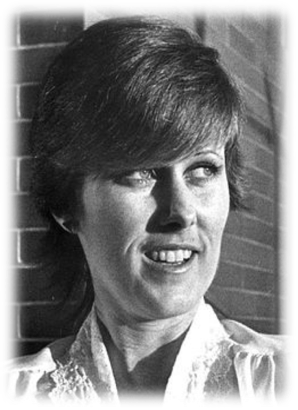
At 18, she married a man named Steve, later admitting she did so not out of love, but to escape her family home. She had two children in 1974 and 1976. She later underwent an abortion and reportedly experienced deep regret after reading Christian anti-abortion publications and viewing graphic images of fetuses.

In 1983, after her husband had a vasectomy, she seduced one of his friends and asked him to impregnate her. That same year, she staged an ambush against her own children, killing her daughter Cheryl and severely injuring her two other children. The plan was allegedly intended to free her from maternal responsibilities so she could pursue a new life with her lover.
In 1984, she was sentenced to life imprisonment. She remains incarcerated.
She has been described as lacking remorse and emotional attachment. Court-appointed experts characterized her as suffering from severe histrionic, narcissistic, and antisocial personality traits, referring to her as a “deviant sociopath.”
Pfeiffer & Walsh Classification
Downs would fit the Type B personality profile in Walsh’s model.
Key features include:
Absence of remorse
Oppositional-defiant traits
Marked histrionism
Narcissistic vulnerability
Emotional detachment from her children
Ideas of reference (notably surrounding themes of abortion and procreation)
In Walsh’s typology, Type B individuals often demonstrate emotional shallowness combined with manipulative and attention-seeking behaviors.
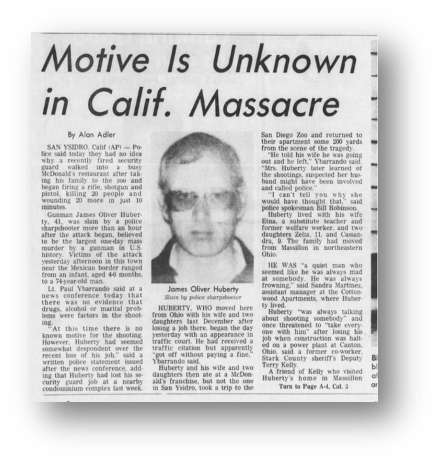
James Oliver Huberty
James Oliver Huberty was born in 1942 in Canton, Ohio, and died in 1984 in San Ysidro, California. He is remembered as the perpetrator of the San Ysidro McDonald’s massacre — one of the deadliest mass shootings in U.S. history at the time.
Huberty grew up in a relatively strict Christian household in the Midwest. His childhood was described as solitary but not overtly violent. He later earned a master’s degree in sociology and obtained an embalming license. Despite this academic background, he worked primarily as a welder and held various small jobs.
After being laid off, he struggled to find stable employment, partly due to erratic and volatile behavior. Those close to him described him as intensely fascinated with firearms and prone to sudden outbursts of rage over minor frustrations.

On July 18, 1984, Huberty entered a McDonald’s restaurant in San Ysidro, San Diego, opened fire, killed 21 people and injured 19 others before being shot by a police sniper.
The massacre became known as the “San Ysidro McDonald’s Massacre.”
According to interviews conducted with his widow, one explanation discussed by investigators was that Huberty believed he had suffered food poisoning after eating McDonald’s chicken nuggets shortly before the shooting. Some interpretations — notably referenced by William Walsh in conferences and documents — suggest that this seemingly minor grievance may have acted as the triggering event in a deeply unstable psychological state.
Pfeiffer & Walsh Classification
In Walsh’s typology, Huberty would most closely resemble a Type B personality with possible heavy metal toxicity exposure.
Type B traits include:
Poor impulse control
Emotional volatility
Antisocial tendencies
Low frustration tolerance
Obsessional thinking patterns
Additionally, Walsh has hypothesized that exposure to heavy metals such as cadmium may contribute to neurological instability, aggression, and impaired impulse control. While definitive toxicological evidence remains debated, this biochemical vulnerability model is central to Walsh’s interpretation of certain violent offenders.
The Serials Killers (Charles Manson, Dahmer and Ted Bundy (and the Columbine Shooters)
Charles Manson – America’s Dark Guru
Charles Manson was born in 1934 and died in 2017. He was an American criminal and cult leader best known for orchestrating the murders committed by members of the “Manson Family” in 1969.

Manson led a group of young followers — often described as a radical countercultural sect with apocalyptic and racial ideology — whom he manipulated into committing brutal killings in the Los Angeles area. Among the victims was actress Sharon Tate, the pregnant wife of Roman Polanski. These murders shocked America and symbolized, for many, the violent end of the 1960s counterculture era.
Manson believed in an imminent racial war, which he called “Helter Skelter.” He thought the murders would trigger this apocalyptic conflict. He was sentenced to life imprisonment and remained incarcerated for decades. He died in custody in 2017 at the Federal Medical Center in Butner, North Carolina.
Throughout his incarceration, Manson was filmed repeatedly during parole hearings. His charismatic, millenarian rhetoric and manipulative personality cemented his place as one of the most infamous figures in American criminal and cultural history.
Pfeiffer & Walsh Classification
With authorization from forensic authorities associated with the FBI Academy in Quantico, William Walsh reportedly obtained a hair sample from Manson after his death for mineral analysis.
According to Walsh’s interpretation, Manson corresponded to a Type B personality, as originally described by Carl Pfeiffer.
In Walsh’s biochemical framework, a Type B personality is characterized by:
Antisocial traits
Low empathy
Emotional detachment
Manipulative tendencies
Reduced remorse
Reported biochemical markers associated with this profile include:
Elevated histamine
Low blood spermine
Elevated kryptopyrroles (suggesting possible pyroluria)
Heavy metal toxicity
Walsh’s model proposes that such biochemical imbalances may contribute to impaired impulse control, reduced affective bonding, and antisocial behavioral patterns.
Jeffrey Dahmer
Jeffrey Dahmer was born in 1960 in Milwaukee, Wisconsin, and died in 1994 in Portage, Wisconsin. He remains one of the most notorious serial killers in American history. Known as the “Milwaukee Cannibal,” Dahmer committed acts of extreme cruelty between 1978 and 1991.

He grew up in a highly unstable family environment, marked by constant parental conflict and a lack of emotional warmth. His upbringing was also influenced by a strict and puritanical form of Catholicism. Within that framework, homosexuality was portrayed as a grave sin, which likely intensified his internal shame and repression of his primary emotional drives.
From adolescence onward, Dahmer displayed a disturbing fascination with animal dissection. He spent hours collecting dead animals and examining their bones. His father, Lionel Dahmer, later described in interviews how he would often find his son playing with bird bones, making them clack together, mesmerized by the sound of carcasses rubbing against each other. Dahmer also preserved animal remains.
Academically, he performed adequately and did not initially present severe behavioral problems at school.
Pfeiffer & Walsh Classification
According to the biochemical typologies developed by Carl Pfeiffer and later expanded by William Walsh, Dahmer would most closely resemble what Walsh describes as a Type B personality.
In Walsh’s framework:
Type A corresponds to “episodic rage disorder” (undermethylation, often associated with high histamine and low serotonin activity, rigid moralism, strong internal control, and explosive anger under stress).
Type B corresponds to a more antisocial, low-empathy, sensation-seeking profile, often linked with different methylation patterns and neurotransmitter imbalances.
Dahmer’s early cruelty toward animals, fascination with fire (reported in some accounts), emotional detachment, and lack of remorse align more closely with the Type B antisocial profile, rather than the explosive episodic rage of Type A individuals.
Key characteristics in this model include:
Childhood cruelty toward animals
Fascination with destructive stimuli (fire, decay, bones)
Antisocial personality traits
Severe repression of sexual identity
Chronic emotional isolation
Deep internalized self-hatred and affective suppression
In Walsh’s biochemical interpretation, such patterns may be linked to abnormal methylation status, neurotransmitter dysregulation, and possibly heavy metal burden — though no direct biological testing was conducted on Dahmer within Walsh’s research framework.
Richard Speck
Richard Speck was born in 1941 and died in 1991. He became infamous for the 1966 mass murder of eight nursing students in a Chicago dormitory.
Raised in a practicing Catholic family, Speck committed petty crimes as early as age 16. In 1966, he brutally murdered eight young women — strangling, stabbing, and slashing their throats in what was described as extreme savagery. He was sentenced to life imprisonment and incarcerated at Stateville Penitentiary in Illinois.
During his incarceration, Speck agreed to participate in biochemical evaluations conducted by Carl Pfeiffer and William Walsh.
Biological Findings
According to Walsh’s published accounts:
Copper levels in Speck’s hair were approximately three times the normal range.
Zinc levels were borderline deficient.
Cadmium and lead were detected at abnormally elevated levels.
Walsh and Pfeiffer interpreted these findings as indicative of possible heavy metal toxicity in childhood. Hair mineral analysis suggested that tissue and brain concentrations may have been even higher.
Pfeiffer & Walsh Classification
Speck was classified by Walsh as a severe Type A personality, corresponding to what he termed “episodic rage disorder.”
Type A individuals in Walsh’s model typically show:
Undermethylation
Elevated histamine levels
Low serotonin activity
Rigid moral thinking
High internal tension
Explosive, intermittent rage episodes
Speck’s history aligned with this profile:
Poor academic performance
Chronic instability
Extreme irritability
Intermittent violent emotional explosions
Walsh reported spending many hours interviewing Speck about his childhood and interpersonal functioning. The biochemical imbalance — particularly copper overload combined with zinc deficiency — was believed to exacerbate neurotransmitter dysregulation, potentially intensifying impulsive aggression.
Ted Bundy
Ted Bundy (Theodor Robert Bundy) was born in 1946 and executed on January 24, 1989.
With approval from authorities connected to the FBI Academy in Quantico, William Walsh reportedly obtained a hair sample from Bundy shortly before his execution at Florida State Prison (Starke). Bundy was executed in the electric chair known as “Old Sparky.”
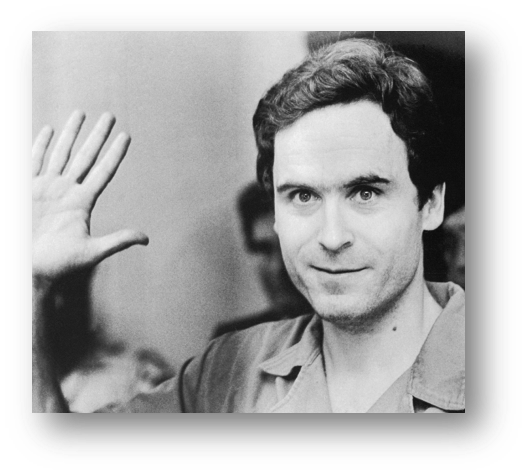
Bundy is widely regarded as one of the most sadistic and prolific serial killers in American history, confessing to at least 30 murders (with many estimates higher).
Raised in a strict religious household where sex and pornography were taboo, Bundy later reported developing violent paraphilic fantasies during adolescence. He became severely addicted to pornography while maintaining an outwardly stable romantic relationship.
Behind this façade, he murdered numerous women without his partner’s knowledge.
Pfeiffer & Walsh Classification
Walsh classified Bundy as a Type A personality, corresponding to what he termed Episodic Rage Disorder.
Type A individuals are typically:
Undermethylated
High in histamine
Rigid and internally tense
Morally absolutist
Prone to explosive anger episodes
Reported biochemical findings included:
Elevated copper relative to zinc
Toxic metal accumulation
Histamine metabolism dysregulation
In Walsh’s model, this combination may predispose to obsessive thinking, internal tension, and intermittent violent outbursts.
Eric Harris & Dylan Klebold – Columbine (1999)
Eric Harris and Dylan Klebold were responsible for the Columbine High School shooting on April 20, 1999, in Colorado.

They killed 13 people and injured many others before committing suicide.
Both adolescents were described as anxious, depressed, and socially isolated. They had reportedly been prescribed SSRIs prior to the attack.
The possible relationship between antidepressant medications and certain mass shootings in the United States has long been controversial.
According to Walsh’s methylation theory, prescribing SSRIs to individuals with a overmethylated profile may increase agitation, aggression, or emotional instability in certain cases. Overmethylation is associated with:
High dopamine and serotonin activity
Inner tension
Heightened anxiety
Increased impulsivity in some contexts
Psychiatrist David Healy has written about similar cases in his works.
It is important to note that the SSRI–violence link remains debated in mainstream psychiatry, and causation has not been definitively established.
Adam Lanza – Sandy Hook (2012)
Adam Lanza was born on April 22, 1992, in New Hampshire. On December 14, 2012, he killed his mother before carrying out the Sandy Hook Elementary School shooting in Newtown, Connecticut, killing 20 children and 6 staff members before taking his own life.

This tragedy profoundly shocked the United States and reignited national debates on gun violence and mental health.
Lanza was described as extremely withdrawn, socially isolated, and psychologically fragile. He rarely left his home and lived in increasing seclusion.
He had been diagnosed with Asperger’s syndrome (now considered part of Autism Spectrum Disorder). Some post-event analyses suggested the possibility of additional severe psychiatric conditions, including potential psychotic features, though no definitive schizophrenia diagnosis had been formally established during his life.
Psychological assessments emphasized:
Extreme social isolation
Paranoia
Lack of emotional reciprocity
Narcissistic vulnerability
Rigid and obsessive thinking patterns
Pfeiffer & Walsh Interpretation
There is no confirmed public biochemical data on Lanza. However, within Walsh’s theoretical framework, such cases are sometimes hypothesized to involve:
Severe methylation imbalance
Neurotransmitter dysregulation
Possible metal toxicity
Heightened inner tension combined with emotional detachment
It is crucial to stress that autism spectrum disorder alone does not predict violent behavior. The overwhelming majority of autistic individuals are nonviolent. Walsh’s model focuses instead on biochemical vulnerabilities interacting with psychological and environmental stressors.
Richard Speck: A Severe Case of Type A Biochemical Personality
Richard Speck was born in 1941 and died in 1991. He is remembered as one of the most brutal mass murderers in American criminal history.
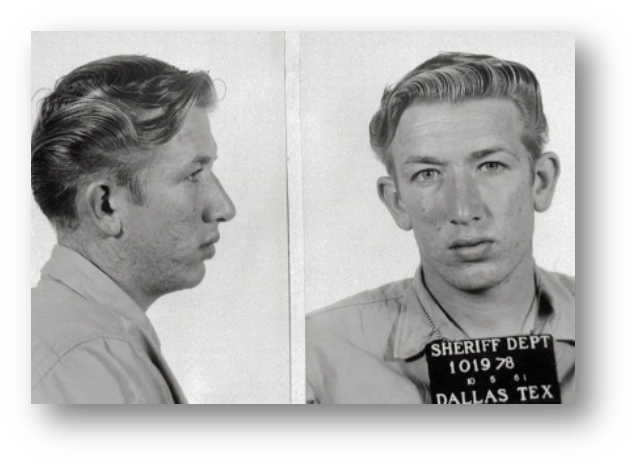
Raised in a practicing Catholic family, Speck worked various small jobs during adolescence and began committing petty crimes at the age of sixteen. His early life was marked by instability, poor academic performance, and increasing behavioral problems.
In July 1966, Speck entered a dormitory housing nursing students in Chicago and murdered eight young women. The killings were carried out with extreme violence: strangulation, throat-slashing, and multiple stab wounds. The brutality of the crime shocked the nation.
Speck was arrested, convicted, and sentenced to life imprisonment. He was incarcerated at Stateville Penitentiary in Illinois.
Participation in Pfeiffer & Walsh Studies
During his incarceration, Speck agreed to participate in biochemical evaluations conducted by Carl Pfeiffer and William Walsh at the Brain Bio Center.
Walsh later reported spending many hours interviewing Speck about:
His childhood environment
His emotional development
His interpersonal relationships
His patterns of anger and impulse control
In addition to psychological interviews, extensive biological testing was performed.
Biochemical Findings
According to Walsh’s published accounts, Speck displayed several significant metabolic abnormalities:
Copper levels approximately three times higher than normal in hair samples
Zinc levels extremely low, near deficiency
Elevated cadmium
Elevated lead
The presence of cadmium and lead suggested possible early-life heavy metal exposure. Pfeiffer and Walsh hypothesized that hair concentrations may underestimate tissue accumulation, meaning brain levels could have been even higher.
In Walsh’s biochemical model:
Excess copper is associated with heightened emotional reactivity and neurotransmitter imbalance
Zinc deficiency may impair impulse regulation and emotional stability
Heavy metals such as cadmium and lead can disrupt neural signaling and cognitive control mechanisms
Together, these imbalances were interpreted as contributing factors to severe behavioral dysregulation.
Classification: Type A Personality
(Episodic Rage Disorder)
William Walsh described Speck as an extreme or “very severe” case of Type A personality, corresponding to what he termed Episodic Rage Disorder.
Core Biochemical Profile (Type A)
Undermethylation
Elevated histamine
High copper relative to zinc
Heavy metal burden
Behavioral Characteristics
Poor academic performance
Chronic irritability
Intense internal tension
Explosive, intermittent violent outbursts
Capacity for remorse in certain cases (though variable)
Type A individuals, in Walsh’s framework, are not characterized by emotional emptiness (as in Type B), but rather by overwhelming internal pressure that can erupt violently when triggered.
They may appear controlled for long periods, but under stress, rage episodes can become extreme and disproportionate.
In conclusion, several points should be noted. First, it is important to understand that this research does not claim to establish a direct cause-and-effect relationship between genetics and criminality. However, it is also important to understand that the synthesis of neurotransmitters and their concentration in certain regions of the brain have a direct and concrete impact on human behavior. Certain crimes, particularly violent ones, often stem from behavioral issues and a malfunctioning nervous system.
Never forget that in the 1970s, more than 20% of American prisoners were former American soldiers suffering from post-traumatic stress disorder (Vietnam), a condition that can greatly increase irritability, impulsivity, and aggression. When we analyze cases of femicide and women killed by their partners, we often find that the perpetrators are former police officers or soldiers suffering from these syndromes. This is not, of course, an attempt to excuse or diminish the seriousness of their actions.
But it is a fact that psychiatric disorders, influenced by genetics, affect human behavior. Genetics does not directly cause crime, but it can influence it, in my opinion. At least, that is what I think.
I hope you enjoyed this article.
References
Walsh, W. J. Biochemical Imbalances in Mental Health Populations. Walsh Research Institute.
https://www.walshinstitute.org/uploads/1/7/9/9/17997321/biochemical_imbalances_in_mental_health_populations.pdf
Walsh, W. J. Nutrient Therapy for ADHD and Behavior Disorders. Walsh Research Institute.
http://www.walshinstitute.org/uploads/1/7/9/9/17997321/nutrient_therapy_for_adhd_and_behavior_disorders.pdf
Walsh, R. J., Glab, L. B., & Haakenson, M. L. (2004). Reduced violent behavior following biochemical therapy.Physiology & Behavior.
https://www.sciencedirect.com/science/article/abs/pii/S0031938404003105
Hambly, J., Francis, K., Walsh, W., & Haywood, A. (2017). Micronutrient therapy for violent and aggressive male youth: An open-label trial. Journal of Child and Adolescent Psychopharmacology.
https://www.walshinstitute.org/uploads/1/7/9/9/17997321/micronutrient_therapy_for_violent_and_aggressive_male_youth-_an_open-label_trial.pdf
Pfeiffer, C. C. (1975). The Schizophrenias: Ours to Conquer.
https://adhdbasics.info/ref/Walsh1997.pdf
Walsh, W. J. Epigenetics as a Source of Mental Dysfunction and the Nutrient-Based Solution.
https://www.walshinstitute.org/uploads/1/7/9/9/17997321/epigenetics_source_of_mental_dysfunction_and_the_nutrient-based_solution_william_walsh_phd.pdf
Williams, R. J. (1956). Biochemical Individuality.
https://cnmedicine.com.au/pdf/brainbiochem.pdf
Hoffer, A. (1998). Orthomolecular Medicine for Physicians.
https://archive.org/details/orthomolecularme0000hoff
Although I can’t discount linking biology to Behavioral Science as it is very feasible, I still can’t discount the link to behavioral science that I’ve studied.
Looking forward to more scientific research.
Thank you it certainly was an eye-opening, well presented article.